Category: Anglican Saints and Feasts

Good ShepherdGood Shepherd

Sculpture of the Good Shepherd

The Good Shepherd (Greek: ποιμήν ο καλός, poimḗn o kalós) is an image used in the pericope of John 10:1–21, in which Jesus Christ is depicted as the Good Shepherd who lays down his life for his sheep. Similar imagery is used in Psalm 23. The Good Shepherd is also discussed in the other gospels, the Epistle to the Hebrews, the First Epistle of Peter and the Book of Revelation.

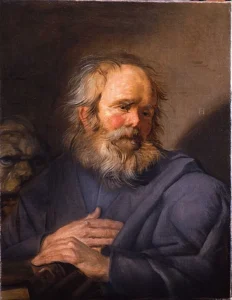
Saint MarkSaint Mark

St. Mark by Frans Hals

St. Mark by Frans Hals

Mark the Evangelist (Koinē Greek: Μᾶρκος, romanized: Mârkos), also known as John Mark (Koinē Greek: Ἰωάννης Μᾶρκος, romanized: Iōánnēs Mârkos; Aramaic: ܝܘܚܢܢ, romanized: Yōḥannān) or Saint Mark, was a Libyan who is traditionally ascribed to be the author of the Gospel of Mark. Most modern scholars agree that the Gospel of Mark is anonymous, though the topic remains contentious among experts. Scholarship is inconclusive on authorship; some reject the attribution to Mark while others debate the identity of Mark. According to Church tradition, Mark founded the episcopal see of Alexandria, which was one of the five most important sees of early Christianity. His feast day is celebrated on April 25, and his symbol is the winged lion

.

Saint George’s DaySaint George’s Day

Saint George Killing the Dragon

Saint George’s Day, also known as the Feast of Saint George, is the feast day of Saint George as celebrated by various Christian Churches and by the several nations, kingdoms, countries and cities of which Saint George is the patron saint including England, and regions of Portugal and Spain (Catalonia and Aragon).

Saint George’s Day is normally celebrated on 23 April. However, Church of England rules denote that no saints’ day should be celebrated between Palm Sunday and the Sunday after Easter Day so if 23 April falls in that period the celebrations are transferred to after it. 23 April is the traditionally accepted date of the saint’s death in the Diocletianic Persecution of AD 303.

EasterEaster

Easter, also called Pasch or Resurrection Sunday, is a festival and holiday celebrating the resurrection of Jesus Christ from the dead, described in the New Testament as having occurred on the third day of his burial after his crucifixion by Romans at Calvary c 33 AD. It is the culmination of the Passion of Christ, preceded by Lent (or Great Lent), a forty day period of fasting, prayer and penance.

English: Resurrection of Christ

English: Resurrection of Christ (Photo credit: Wikipedia)

Good FridayGood Friday

Christ Crucified by Diego Velazquez, 1632

Christ Crucified by Diego Velazquez, 1632

Good Friday, also known as Holy Friday, Great Friday, Great and Holy Friday, or Friday of the Passion of the Lord, is a solemn Christian holy day commemorating the crucifixion of Jesus and his death at Calvary (Golgotha). It is observed during Holy Week as part of the Paschal Triduum.

Members of many Christian denominations, including the Catholic, Eastern Orthodox, Lutheran, Anglican, Methodist, Oriental Orthodox, United Protestant and some Reformed traditions (including certain Continental Reformed, Presbyterian and Congregationalist churches), observe Good Friday with fasting and church services. In many Catholic, Lutheran, Anglican and Methodist churches, the Service of the Great Three Hours’ Agony is held from noon until 3 p.m.— the hours the Bible records darkness covering the land until Jesus’ death on the cross. In the Catholic, Lutheran and Anglican traditions of Christianity, the Stations of the Cross are prayed in the evening of Good Friday, as with other Fridays of Lent. Members of the Moravian Church have a Good Friday tradition of cleaning gravestones in Moravian cemeteries.

The date of Good Friday varies from one year to the next in both the Gregorian and Julian calendars. Eastern and Western Christianity disagree over the computation of the date of Easter and therefore of Good Friday. Good Friday is a widely instituted legal holiday around the world. Some predominantly Christian countries, such as Germany, have laws prohibiting certain acts—public dancing, horse racing—in remembrance of the sombre nature of Good Friday.