Category: Home

Saint ThomasSaint Thomas

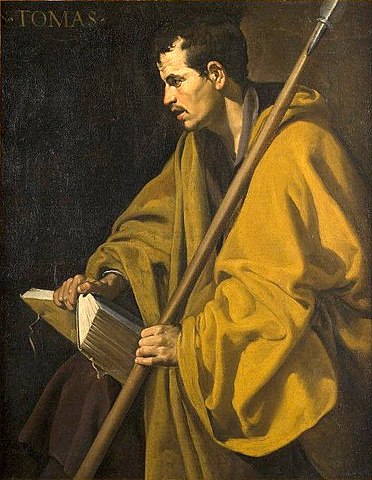
Saint Thomas

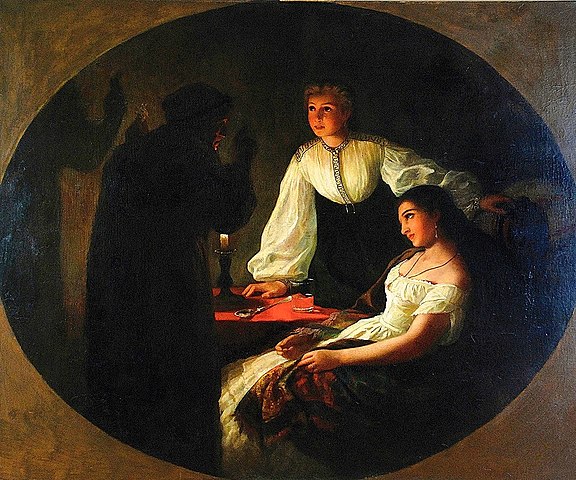
Thomas the Apostle (Biblical Hebrew: הקדוש תוֹמאס ; ָAncient Greek: Θωμᾶς; Coptic: ⲑⲱⲙⲁⲥ; Classical Syriac: ܬܐܘ Tʾōmā šliḥā; Malayalam: േതാമസ്അസ്േതാലൻ Tēāmas appastēālan), also called Didymus (“twin”) was one of the Twelve Apostles of Jesus according to the New Testament. Thomas is commonly known as “Doubting Thomas” because he doubted Jesus’ resurrection when first told of it (as related in the Gospel of John alone); later, he confessed his faith, “My Lord and my God,” on seeing Jesus’ crucifixion wounds.

According to traditional accounts of the Saint Thomas Christians of modern-day Kerala in India, Thomas is believed to have travelled outside the Roman Empire to preach the Gospel, travelling as far as the Malabar Coast which is in modern-day Kerala State, India. According to their tradition, Thomas reached Muziris (modern-day North Paravur and Kodungalloor in Kerala State, India) in AD 52. In 1258, some of the relics were brought to Ortona, in Abruzzo, Italy, where they have been held in the Church of Saint Thomas the Apostle. He is often regarded as the patron saint of India, and the name Thomas remains quite popular among Saint Thomas Christians of India.

Saint AmbroseSaint Ambrose

Ambrose of Milan

Aurelius Ambrosius (Italian: Sant’Ambrogio [ˌsantamˈbrɔːdʒo]; Lombard: Sant’Ambroeus [ˌsãtãˈbrøːs]), better known in English as Saint Ambrose (/ˈæmbroʊz/; c. 340 – 4 April 397), was a bishop of Milan who became one of the most influential ecclesiastical figures of the 4th century. He was the Roman governor of Liguria and Emilia, headquartered in Milan, before being made bishop of Milan by popular acclamation in 374. Ambrose was a staunch opponent of Arianism, and has been accused of fostering persecutions of Arians, Jews, and pagans.

Traditionally, Ambrose is credited with promoting “antiphonal chant”, a style of chanting in which one side of the choir responds alternately to the other, as well as with composing Veni redemptor gentium, an Advent hymn.

Ambrose was one of the four original Doctors of the Church, and is the patron saint of Milan. He is notable for his influence on Augustine of Hippo.

Saint NicholasSaint Nicholas

Saint Nicholas

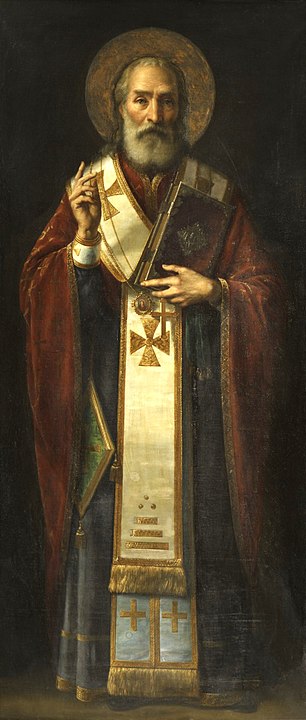
Saint Nicholas of Myra (traditionally 15 March 270 – 6 December 343), also known as Nicholas of Bari, was an early Christian bishop of Greek descent from the maritime city of Myra in Asia Minor (Greek: Μύρα; modern-day Demre, Turkey) during the time of the Roman Empire. Because of the many miracles attributed to his intercession, he is also known as Nicholas the Wonderworker. Saint Nicholas is the patron saint of sailors, merchants, archers, repentant thieves, prostitutes, children, brewers, pawnbrokers, unmarried people, and students in various cities and countries around Europe. His reputation evolved among the faithful, as was common for early Christian saints, and his legendary habit of secret gift-giving gave rise to the traditional model of Santa Claus (“Saint Nick”) through Sinterklaas.

Very little is known about the historical Saint Nicholas. The earliest accounts of his life were written centuries after his death and contain many legendary elaborations. He is said to have been born in the Greek seaport of Patara, Lycia in Asia Minor to wealthy Christian parents.[9] In one of the earliest attested and most famous incidents from his life, he is said to have rescued three girls from being forced into prostitution by dropping a sack of gold coins through the window of their house each night for three nights so their father could pay a dowry for each of them. Other early stories tell of him calming a storm at sea, saving three innocent soldiers from wrongful execution, and chopping down a tree possessed by a demon. In his youth, he is said to have made a pilgrimage to Egypt and Palestine. Shortly after his return, he became Bishop of Myra. He was later cast into prison during the persecution of Diocletian, but was released after the accession of Constantine. An early list makes him an attendee at the First Council of Nicaea in 325, but he is never mentioned in any writings by people who were actually at the council. Late, unsubstantiated legends claim that he was temporarily defrocked and imprisoned during the Council for slapping the heretic Arius. Another famous late legend tells how he resurrected three children, who had been murdered and pickled in brine by a butcher planning to sell them as pork during a famine.

Fewer than 200 years after Nicholas’s death, the St. Nicholas Church was built in Myra under the orders of Theodosius II over the site of the church where he had served as bishop, and his remains were moved to a sarcophagus in that church. In 1087, while the Greek Christian inhabitants of the region were subjugated by the newly arrived Muslim Seljuk Turks, and soon after their church was declared to be in schism by the Catholic church, a group of merchants from the Italian city of Bari removed the major bones of Nicholas’s skeleton from his sarcophagus in the church without authorization and brought them to their hometown, where they are now enshrined in the Basilica di San Nicola. The remaining bone fragments from the sarcophagus were later removed by Venetian sailors and taken to Venice during the First Crusade.
AdventAdvent

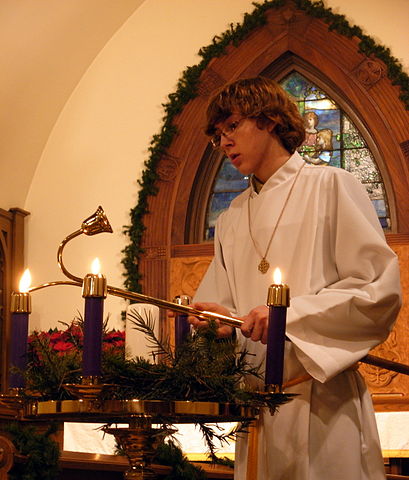
An acolyte lighting Advent candles

Advent comes from the Latin word ‘adventus’ meaning ‘Coming.’ Advent begins the church year starting four Sundays before Christmas. The season of Advent as been set aside as a time of preparation since the 6th century. Advent is a time for preparing for Christ’s second coming, even as we remember and celebrate his first coming at Christmas. This is why the colour of the season of Lent is used, purple or blue, the colours also of Lent, of forgiveness and repentance.

Traditions vary from church to church, but usually one week, either week three or four in Advent, is set aside as more celebratory than others. Rose is the colour of this week rather than purple, which is why a rose candle is used. In our churches we will celebrate this week on the fourth Sunday of Advent, when we remember Mary, the mother of Jesus to whom is attributed that great song of joy, the Magnificat.